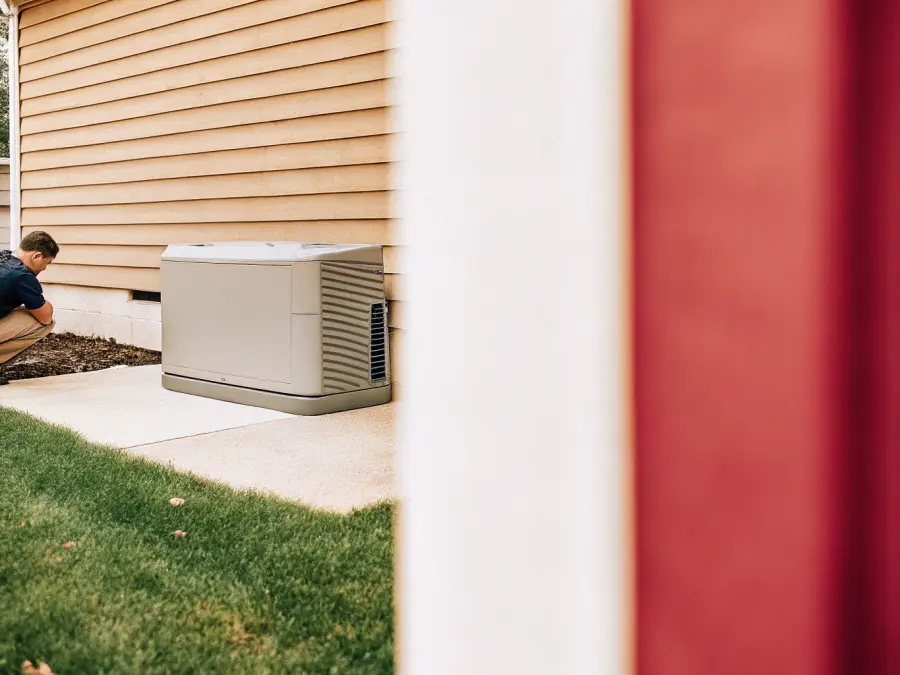
A standby generator is worth it if a power outage means losing something you cannot afford to lose: heat in January, a running sump pump, a well pump, a fridge full of food, or a home office. In coastal Rhode Island, where winter storms regularly knock out the grid, a standby unit that starts on its own within seconds pays for the peace of mind. If outages are rare and brief for you, a portable may be enough.
There are two kinds of backup power, and they are not the same. A portable generator is cheaper but you have to drag it out, run it outside in the storm, fuel it, and plug things in by hand. A standby generator is a permanent unit wired to your home that senses an outage, starts automatically, and switches back when the grid returns, whether you are home or not. For a lot of Rhode Island homes near the coast, that hands-off reliability is the whole point.
When a standby generator makes sense
- Coastal storms regularly leave you without power for hours or days
- You rely on a sump pump or well pump that stops when the power does
- Losing heat on the coldest nights risks frozen pipes
- Someone in the home depends on powered medical equipment
- You work from home and cannot afford to go dark
- You would rather not manhandle a portable unit in the rain at 2 a.m.
What size generator do I need?
It depends on what you want to keep running. Backing up the essentials, like heat, the fridge, and the sump pump, takes a smaller and less expensive unit than powering the entire house including central AC. An electrician calculates your load and walks you through the honest trade-off between coverage and cost, so you are not overbuying for circuits you would never miss during an outage.
How does it start on its own?
A standby generator is wired to an automatic transfer switch. When it senses the grid drop, it starts the generator within seconds, powers your chosen circuits, and then switches back and shuts down when utility power returns. You do not have to be home or flip anything. That is the core advantage over a portable unit you have to set up by hand every time.
What is involved in installing one
A proper install covers the full electrical side: sizing the unit, setting it on a pad, wiring the transfer switch, and connecting your circuits. It also needs a fuel source, natural gas or propane, which we coordinate with a licensed gas fitter so one team manages the whole project. Like other major electrical work in Rhode Island, it is permitted and inspected.
Keeping it ready
A standby generator needs about one service a year, plus its own periodic self-tests. An annual check on the oil, battery, connections, and transfer switch, run under load, is what makes sure it actually starts during the next storm instead of failing when you finally need it.
If a bad winter outage would leave your home cold and your basement flooding, it is worth pricing out. We will size an honest unit for what you actually need to keep on and quote it flat-rate.